Case Study, Programming
Autograder Fixed in Under 24 Hours: 100/100

The assignment
Jack (name changed per NDA) was completing a computer science degree and needed to submit a networking assignment on distance vector routing. The topic required both solid coding skills and a working knowledge of the underlying protocol theory.
The deadline was June 9. Jack reached us on June 8. Under 24 hours to deliver.
What made this difficult
Three problems arrived together, each one compounding the others.
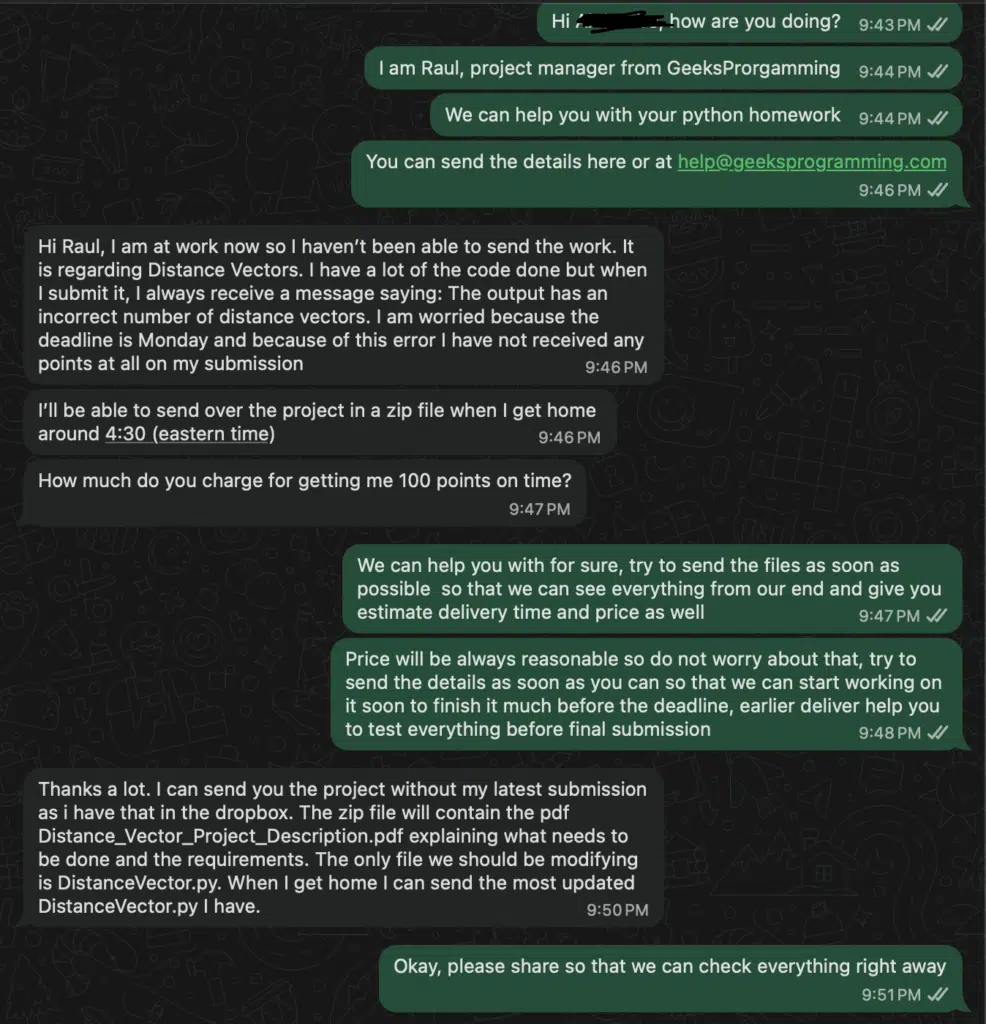
Time. Less than 24 hours from first contact to deadline. We replied immediately, but Jack’s response came late, and he initially forgot to upload some files. We contacted him over WhatsApp to collect everything.
Incomplete context. No lecture notes. Without knowing how his instructor framed the topic, we had to infer the expected conventions from the assignment spec alone.
Buggy starter code. When we reviewed the uploaded files, the existing code had two problems: inconsistent output formatting and a broken routing table. That combination is exactly why code fails on submission even when it runs locally.
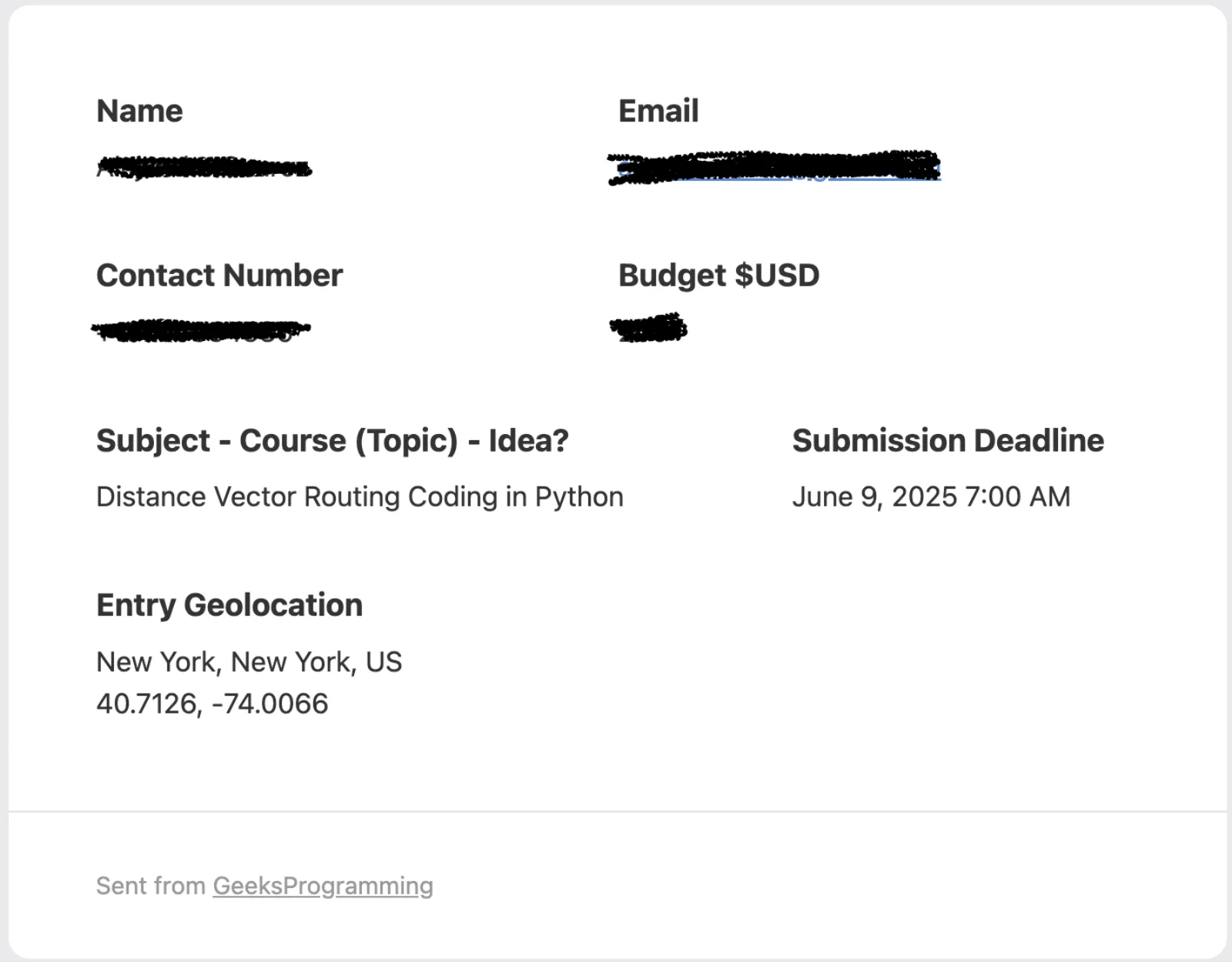
After reviewing the files, our project manager quoted a price. Jack agreed. The moment payment cleared, the project manager opened a direct WhatsApp channel between Jack and the developer taking the assignment.
How we fixed it
Our networking developer followed a four-step process.
Step 1: align with the course material
We asked Jack for his lecture slides before writing a single line. Routing conventions vary by course: some instructors expect Bellman-Ford iterations printed per-round, others expect only the final stable table. Matching the expected format is what passes hidden test cases that a generic correct solution would fail.
We also set up a local test environment mirroring Gradescope’s autograder structure, without touching the original files.
Step 2: trace and fix the output bug
The core defect was a mismatch between the number of distance vectors printed and the count the autograder expected. The critical section of the update logic was rewritten to guarantee that every routing table change printed exactly once, in the correct order, with the correct field widths.
Step 3: test across multiple topologies
We ran the fixed code against ProvTopo1 (4 nodes) and EvalTopo1 (4 nodes). Both produced output that matched the expected format on every iteration. Checking multiple topologies catches edge cases where a single-path graph hides a bug that appears only when there are parallel routes.
Step 4: deliver with full context
Because Jack stayed in the WhatsApp channel throughout, questions were answered in real time. The final code was sent with annotated screenshots before the deadline so Jack could verify the output himself before submitting.
The result
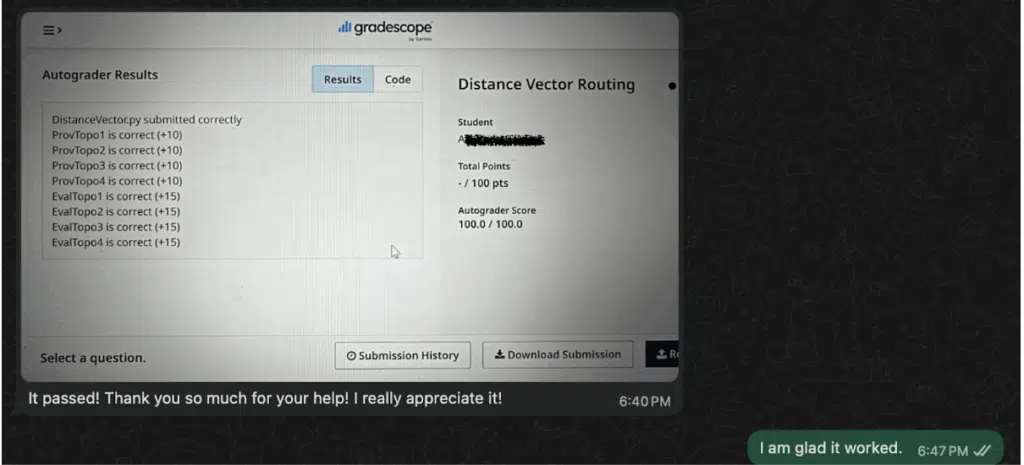
Jack submitted and scored 100/100.
- Submitted on time despite a sub-24-hour window
- Routing table updates and formatted outputs passed all autograder checks
- Jack reviewed the output against his lecture notes before hitting submit
What Jack said
The student confirmed the result after submission.
Tight deadlines and broken starter code are the two most common reasons students come to us. If you are in the same situation, send your brief to Computer Science Homework Help and we will quote within 15 minutes. Pay 50% to start, 50% after you verify the code runs.
Related articles
-
 Java
JavaSpring Batch: A Practical Guide to Restartable Jobs
Learn Spring Batch 6 through a restartable CSV-to-database job covering jobs, steps, chunks, metadata, fault tolerance, parameters, testing, and scaling.
Sep 23, 2026
-
 Programming
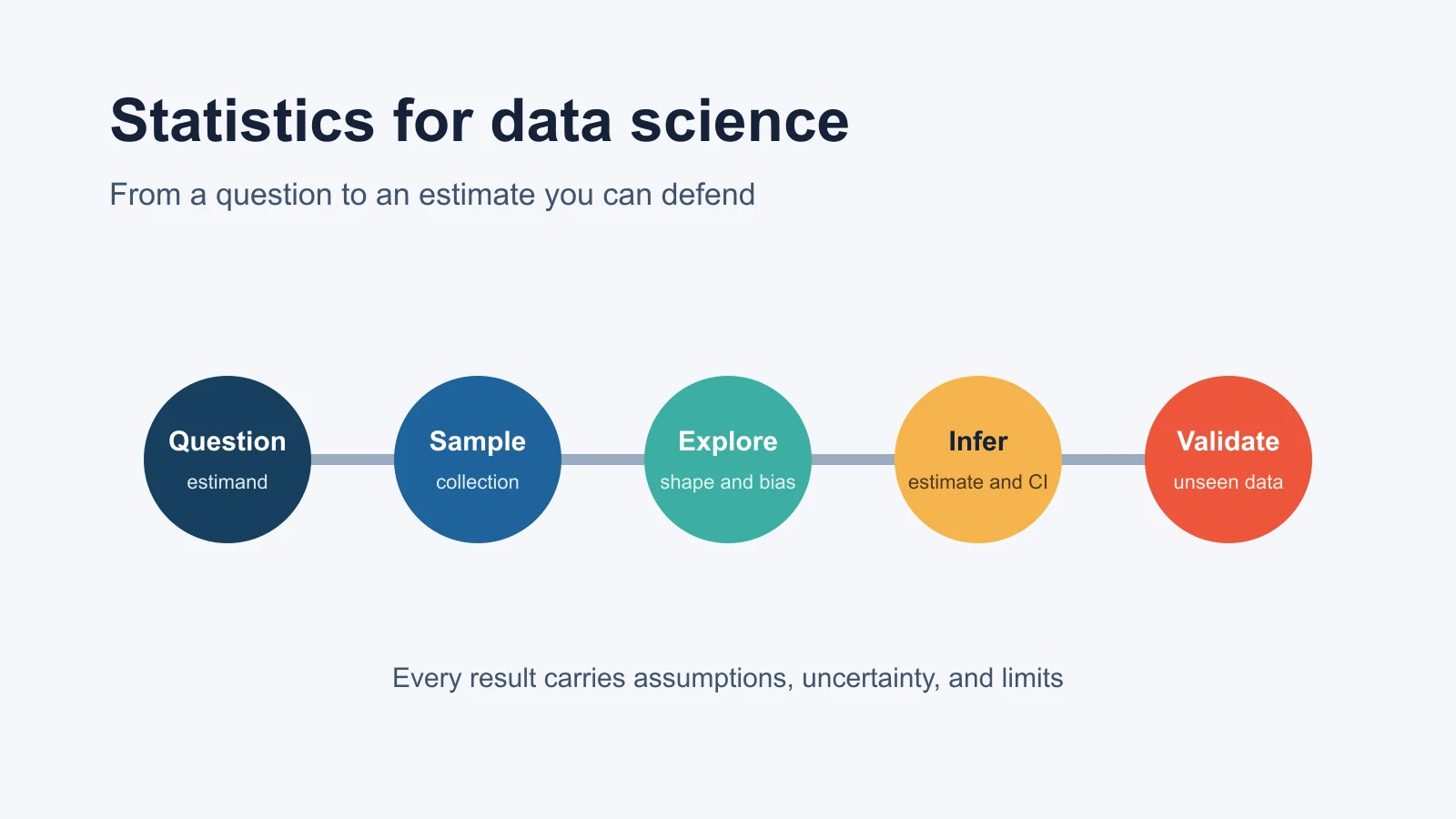
Statistics for Data Science: Complete Guide with Examples
Learn the statistics behind data science with Python examples on distributions, sampling, confidence intervals, hypothesis tests, regression, and leakage.
Sep 23, 2026
-
 Programming
Can You Get Caught Using Someone Else's Code?
Yes, you can get caught. MOSS, JPlag, and Codequiry detect copied code even after renaming variables or restructuring. Here is what actually happens if you are.
Jul 17, 2025