Programming, Self Improvement
Functional Programming in JavaScript
· Linet M.
Functional programming in JavaScript treats functions as first-class citizens, enforces immutability, and eliminates side effects. Those three constraints together produce code that is predictable, easy to test, and straightforward to maintain at scale.
This guide covers the core concepts, practical techniques, and real trade-offs. If you are working through a JavaScript or web-development assignment and need expert help, GeeksProgramming’s developers can step in at any stage. See programming homework help for how that works.
What Functional Programming Actually Means
Functional programming is a paradigm that models computation as the evaluation of mathematical functions. It avoids changing state and mutable data.
Three properties define the approach:
- Pure functions produce identical output for identical input, with no observable side effects.
- Immutability means data structures are not changed after creation. New structures are built instead.
- Function composition builds complex behavior from small, reusable functions chained together.
These are constraints, not suggestions. Code that violates them is not functional, even if it uses .map() and .filter().
Five Core Concepts
Pure Functions
A pure function has two properties: same input always returns same output, and calling it changes nothing outside the function.
// Pure: no external state touched
function add(a, b) {
  return a + b;
}

// Impure: reads external state
let tax = 0.1;
function priceWithTax(price) {
  return price + price * tax; // depends on external variable
}
Pure functions are the unit-testable building block of functional code. A test only needs to assert on the return value.
Immutability
Instead of mutating an array or object, create a new one with the change applied.
// Mutable (imperative style)
const scores = [80, 90, 75];
scores.push(95); // modifies the original

// Immutable (functional style)
const scores = [80, 90, 75];
const updated = [...scores, 95]; // new array, original untouched
Immutability eliminates an entire category of bugs: the ones where a value changes somewhere unexpected and you spend two hours tracking down which function touched it.
Higher-Order Functions
A higher-order function takes one or more functions as arguments, returns a function, or both. JavaScript’s built-in array methods are the most common examples.
const grades = [55, 72, 88, 91, 60];

// map: transform each element
const curved = grades.map((g) => g + 5);

// filter: keep only passing grades
const passing = grades.filter((g) => g >= 60);

// reduce: aggregate to a single value
const total = grades.reduce((sum, g) => sum + g, 0);
const average = total / grades.length;
These three cover the majority of array transformations you will write in practice.
Recursion
Recursion replaces imperative loops in strictly functional code. A function calls itself on a smaller version of the problem until it reaches a base case.
function factorial(n) {
  if (n <= 1) return 1;
  return n * factorial(n - 1);
}

factorial(5); // 120
JavaScript does not guarantee tail-call optimization in most engines, so deep recursion still risks stack overflow. For most production use cases, reduce or a while loop is safer than deep recursion.
Function Composition
Composition connects functions so the output of one becomes the input of the next.
const double = (x) => x * 2;
const addTen = (x) => x + 10;
const square = (x) => x * x;

// Manual composition
const result = square(addTen(double(3))); // double(3)=6, addTen(6)=16, square(16)=256

// Compose utility (right-to-left)
const compose =
  (...fns) =>
  (x) =>
    fns.reduceRight((acc, fn) => fn(acc), x);
const transform = compose(square, addTen, double);
transform(3); // 256
Libraries like Ramda expose compose and pipe (left-to-right variant) so you do not need to write the utility yourself.
Practical Techniques
Currying and Partial Application
Currying converts a multi-argument function into a chain of single-argument functions. Each call returns a new function waiting for the next argument.
// Standard function
function multiply(a, b) {
  return a * b;
}

// Curried version
const curriedMultiply = (a) => (b) => a * b;

const triple = curriedMultiply(3);
triple(5); // 15
triple(10); // 30
Partial application is related but different: you fix some arguments of a function and return a new function for the remaining ones. Both techniques produce reusable, composable helpers.
Memoization
Memoization caches function results by input. Subsequent calls with the same argument skip recomputation and return the cached value.
function memoize(fn) {
  const cache = new Map();
  return function (...args) {
    const key = JSON.stringify(args);
    if (cache.has(key)) return cache.get(key);
    const result = fn.apply(this, args);
    cache.set(key, result);
    return result;
  };
}

const expensiveCalc = memoize((n) => {
  // simulate heavy work
  return n * n * n;
});

expensiveCalc(50); // computed
expensiveCalc(50); // returned from cache
Memoization works best on pure functions. Caching an impure function produces stale results.
Lazy Evaluation
Lazy evaluation defers computation until the value is actually needed. JavaScript does not have built-in lazy sequences, but generators give you the same effect.
function* lazyRange(start, end) {
  for (let i = start; i <= end; i++) {
    yield i;
  }
}

const nums = lazyRange(1, 1000000);
const first5 = [...Array(5)].map(() => nums.next().value);
// Only 5 values computed, not 1,000,000
This matters when processing large data sets where you only need part of the output.
Functional vs. Other JavaScript Styles
JavaScript is multi-paradigm. Functional, object-oriented, and procedural code coexist in the same codebase. Knowing which style fits which problem is the skill.
| Property | Procedural | Object-Oriented | Functional |
|---|---|---|---|
| State | Mutable variables | Encapsulated in objects | Avoided or immutable |
| Control flow | Loops, conditionals | Methods, polymorphism | Recursion, composition |
| Side effects | Common | Managed via encapsulation | Avoided in pure functions |
| Testability | Harder (global state) | Moderate | High (pure functions) |
| JavaScript fit | Good for scripts | Good for UI components | Good for data pipelines |
React’s component model uses functional principles heavily: components as pure functions of props, immutable state updates via setState, and hooks that compose behavior. Understanding functional programming makes React significantly easier to reason about.
Advanced Concepts Worth Knowing
Closures
A closure is a function that retains access to variables from its enclosing scope after that scope has closed. Closures power many functional patterns.
function counter(start) {
  let count = start;
  return {
    increment: () => ++count,
    decrement: () => --count,
    value: () => count,
  };
}

const c = counter(0);
c.increment(); // 1
c.increment(); // 2
c.value(); // 2
Closures make it possible to create private state without classes.
Promises and Async Functional Patterns
Promises bring functional ideas to async code: they are values representing eventual results, and .then() is essentially map for async operations.
fetch('/api/data')
  .then((res) => res.json())
  .then((data) => data.filter((item) => item.active))
  .then((active) => active.map((item) => item.name))
  .catch((err) => console.error('fetch failed:', err));
The chain is a pipeline. Each step transforms the value from the previous step without mutating shared state.
Functors and Monads
A functor is any container you can map over: arrays are functors, Promises are functors. A monad is a functor with a flatMap (or chain) operation that prevents nested wrapping.
You work with monads in JavaScript every time you use Promise.then() or Array.flatMap(). You do not need to understand category theory to use them, but knowing the vocabulary helps when reading library documentation for Ramda, fp-ts, or similar tools.
Real-World Libraries
Lodash ships a broad utility set including functional helpers (_.curry, _.flow, _.partial). It is the most widely installed JavaScript utility library and works in any environment.
Ramda is built specifically for functional programming. Every function is auto-curried and data-last by convention, which makes composition natural. It does not mutate its inputs.
fp-ts brings typed functional programming to TypeScript. It implements Option, Either, Task, and other algebraic types. The learning curve is steep but the type safety payoff is significant in large codebases.
For building UIs, React and Vue 3’s Composition API both apply functional patterns to component design. React function components are pure functions of props; hooks are composable units of behavior.
Common Mistakes
Mutating inside .map() or .reduce() defeats immutability even though the methods look functional. The callback must not modify external variables or the original array.
Overusing recursion in JavaScript causes stack overflows on inputs beyond a few thousand levels. Use reduce or iteration for large data sets unless your runtime guarantees tail-call optimization (most do not).
Ignoring performance cost of repeated spreading. [...arr, newItem] in a tight loop allocates a new array every iteration. Functional style does not mean careless allocation. Profile first, optimize where it matters.
Caching impure functions with memoization returns stale results. Memoization only works when the same input always produces the same output.
Future Directions
WebAssembly lets you compile languages like Rust and OCaml to .wasm and call the result from JavaScript. Both languages have strong functional programming support. Performance-critical functional pipelines can run in Wasm and interop with the JavaScript layer.
Serverless functions (AWS Lambda, Cloudflare Workers) map naturally to the functional model: a function receives an event, computes a result, returns it. No shared state between invocations. The constraints of serverless push developers toward pure, stateless handlers by default.
TypeScript keeps improving its support for functional patterns. Discriminated unions, template literal types, and mapped types all make functional techniques more expressive and type-safe than they were in earlier TypeScript versions.
Related Reading
- Assignment help across JavaScript, Node.js, React, and related topics starts at GeeksProgramming.
Related articles
-
 Java
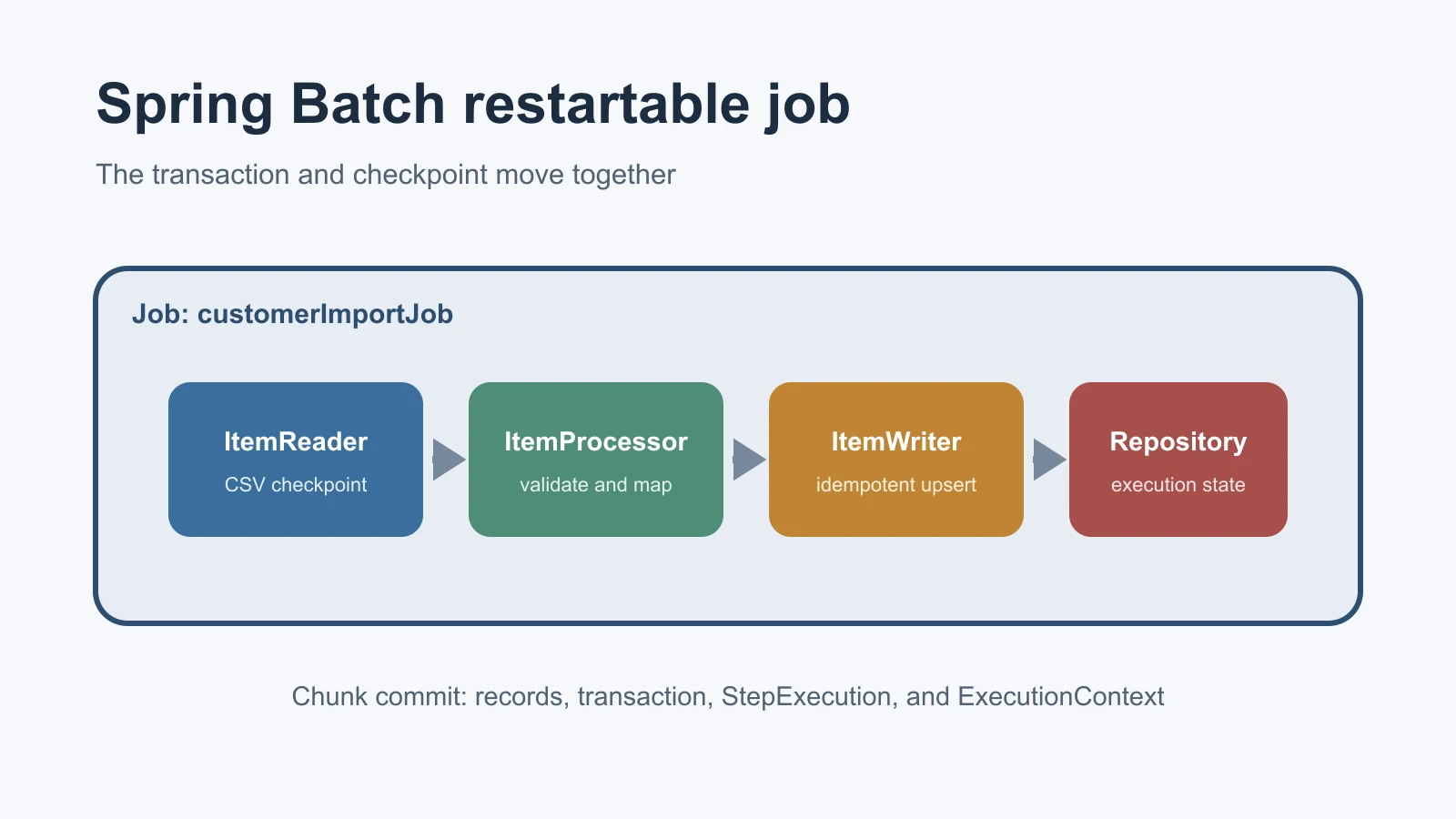
JavaSpring Batch: A Practical Guide to Restartable Jobs
Learn Spring Batch 6 through a restartable CSV-to-database job covering jobs, steps, chunks, metadata, fault tolerance, parameters, testing, and scaling.
Sep 23, 2026
-
 Programming
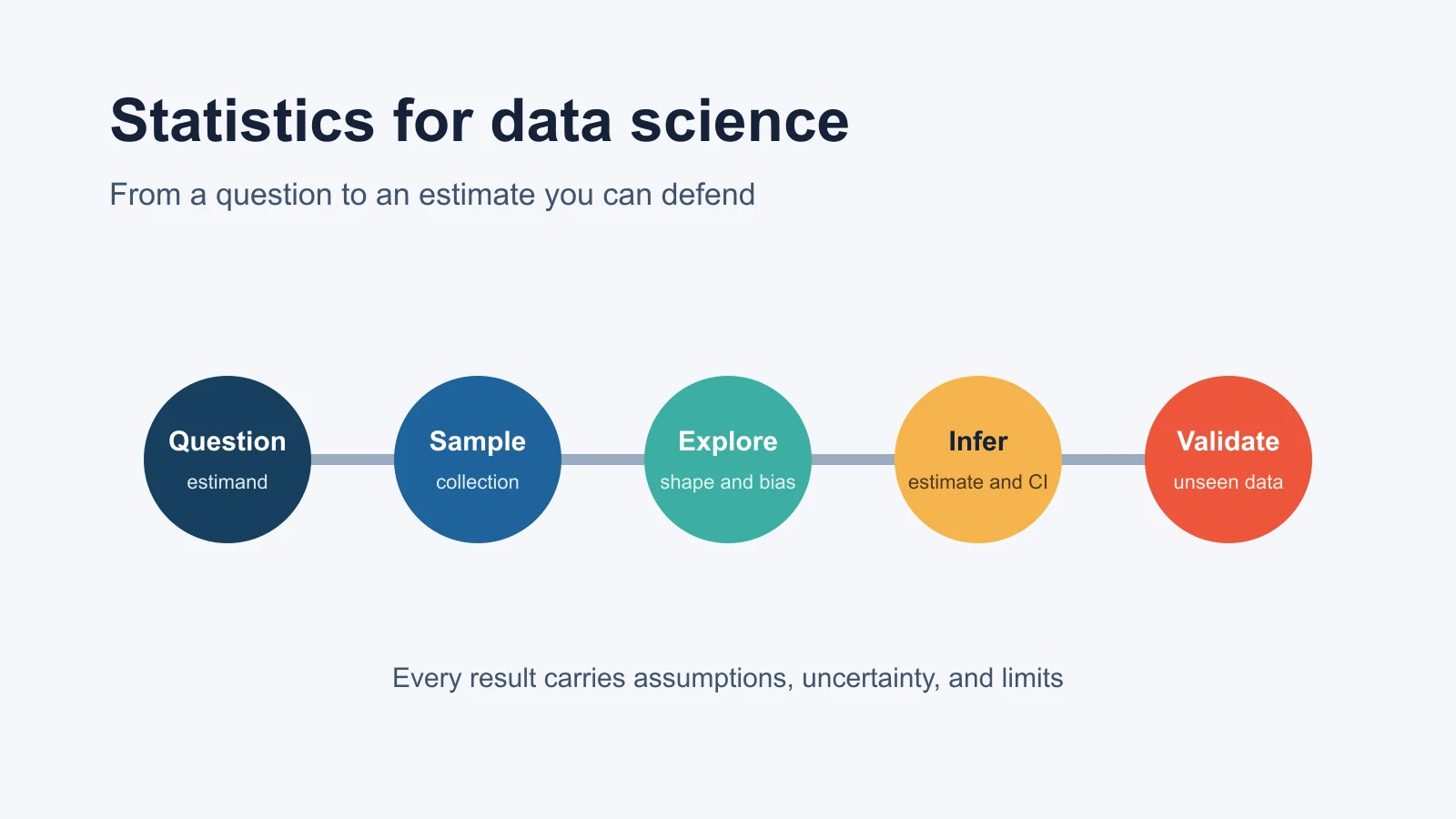
Statistics for Data Science: Complete Guide with Examples
Learn the statistics behind data science with Python examples on distributions, sampling, confidence intervals, hypothesis tests, regression, and leakage.
Sep 23, 2026
-
 Case Study
Autograder Fixed in Under 24 Hours: 100/100
How our networking expert diagnosed a broken distance vector routing submission and delivered a 100/100 autograder score before the deadline.
Sep 2, 2025