Programming
Top Programming Languages to Learn in 2026
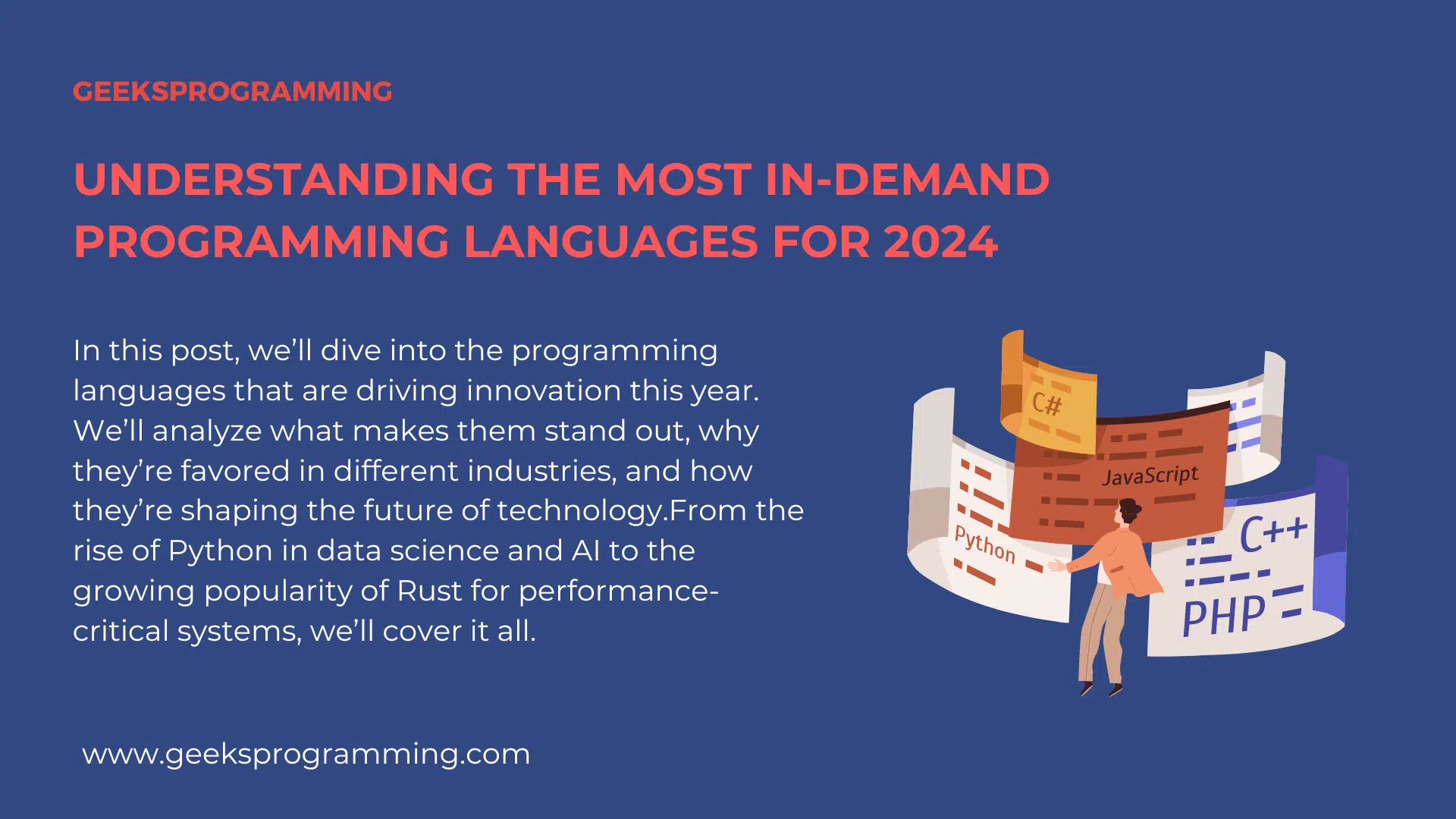
Demand for programming languages shifts fast, and picking the wrong one to invest time in is a real career cost. This post covers the four languages gaining the most traction right now: Python for data and AI, JavaScript and TypeScript for web, Rust for performance-critical systems, and Go for cloud infrastructure. For each one you get the use cases, key libraries, and an honest picture of the job market.
If you are working through assignments in any of these languages and need expert help, GeeksProgramming covers all four.
How to Evaluate a Programming Language
Four factors matter when deciding which language to invest time in.
Popularity determines community size, job postings, and the volume of learning resources. Python, JavaScript, and Java lead most popularity indices because of their reach across web, data, and enterprise. A larger community historically means more maintained libraries and a deep archive of answered Stack Overflow questions to search, though new question volume on Stack Overflow itself has since been largely displaced by AI coding assistants, so ramp-up time on new problems now depends more on how well those tools handle the language.
Industry adoption tells you which sectors actually use a language in production. Python dominates data science, machine learning, and AI research. JavaScript and TypeScript power virtually every web front-end and much of the back-end. Rust is the choice for systems code where memory bugs are unacceptable. Go is the default language for cloud-native tooling at companies like Google, Uber, and Dropbox.
Ecosystem quality covers the libraries, frameworks, and tooling that sit around the language. Python’s ecosystem (pandas, NumPy, scikit-learn, TensorFlow, PyTorch, Django, Flask) is the primary reason it stays dominant in data work. A weak ecosystem forces you to build from scratch; a strong one multiplies what you can ship.
Job market demand reflects where companies are spending. Python and JavaScript consistently top job listings. Go and Rust are growing in job volume as cloud-native and security-critical roles expand. Demand also varies by region and industry vertical, so check local listings alongside global trends.
Python: Data Science, AI, and General Purpose
Python holds the top spot on the TIOBE index, though JavaScript remains the most-used language in the Stack Overflow developer survey, with Python close behind among the top languages. Its combination of readable syntax and a deep library ecosystem makes it the dominant language in data science, AI, and machine learning.
Where Python is used
- Data science and machine learning: pandas for data manipulation, NumPy for numerical computing, scikit-learn for classical ML, TensorFlow and PyTorch for deep learning. These are not optional add-ons; they are what the entire research and industry pipeline runs on.
- Web development: Django for full-featured applications with an ORM and admin panel built in; Flask for lightweight APIs and microservices.
- Automation and scripting: Python’s readable syntax and cross-platform compatibility make it the standard choice for writing scripts that run on Linux servers, CI pipelines, and cloud-based systems.
Why Python keeps growing
The short answer is AI. Every new model, every new research paper, and most production ML pipelines are Python-first. That means new graduates learning AI, data engineers managing pipelines, and companies adopting machine learning all funnel into the Python job market at the same time. Automation adds a second wave: finance, healthcare, and logistics all use Python to automate workflows that previously required manual effort.
If you are studying Python in a course and need assignment help, our Python assignment help service matches you with a specialist in your exact library stack.
Key Python libraries
| Library | Primary use |
|---|---|
| pandas | Data manipulation and analysis |
| NumPy | Numerical computing and array operations |
| scikit-learn | Classical machine learning: classification, regression, clustering |
| TensorFlow | Production deep learning (Google-backed) |
| PyTorch | Research deep learning (Meta-backed, preferred in academia) |
| Django | Full-stack web framework |
| Flask | Lightweight API and microservice framework |
| Requests | HTTP calls and API integration |
JavaScript and TypeScript: Web, Front-End, and Full-Stack
JavaScript is the only language that runs natively in the browser. That fact alone gives it irreplaceable status in web development. TypeScript layers static typing on top of JavaScript and has become the standard for larger codebases where catching type errors at compile time matters more than iteration speed.
Where JavaScript and TypeScript are used
- Front-end development: React, Angular, and Vue all compile to JavaScript. React is the dominant choice for single-page applications; Angular is common in enterprise environments; Vue suits projects that need a low-ceremony framework.
- Back-end development: Node.js lets you write server-side code in JavaScript, so full-stack teams can share language, tooling, and even code between client and server. Express and Fastify are the two most common Node.js frameworks.
- Mobile and desktop apps: React Native targets iOS and Android from a shared JavaScript codebase. Electron packages web apps as native desktop applications (VS Code is built on Electron).
TypeScript vs JavaScript
JavaScript is dynamically typed, which speeds up prototyping but creates a category of runtime bugs that TypeScript eliminates at compile time. TypeScript’s type checker catches mismatched function signatures, missing properties, and null dereferences before the code ships. For teams larger than two or three people, the trade-off is almost always worth it.
JavaScript fundamentals are worth learning solidly before reaching for TypeScript’s type system.
Key JavaScript and TypeScript resources
- React: component-based UI library, the most in-demand front-end skill in job listings
- Node.js: server-side JavaScript runtime; powers high-throughput, event-driven applications
- TypeScript: superset of JavaScript with static typing; now the default at most large tech companies
- Vue.js: lightweight front-end framework with a gentle learning curve
- Angular: opinionated full-featured framework built with TypeScript by default
For JavaScript or TypeScript coursework, see help with coding assignments.
Rust: Memory Safety Without a Garbage Collector
Rust fixes the two biggest problems in systems programming: memory bugs and data races. It does this at compile time through an ownership system, which means no garbage collector and no runtime overhead. The result is code that performs like C or C++ but ships far fewer security vulnerabilities.
Where Rust is used
- Systems programming: operating systems, device drivers, embedded firmware. Rust competes directly with C and C++ in these environments and wins on safety.
- WebAssembly: Rust is one of the primary languages for compiling to WebAssembly (WASM), which lets high-performance code run inside the browser sandbox.
- Blockchain infrastructure: Solana and Polkadot both use Rust. The language’s memory-safety guarantees matter in financial applications where a buffer overflow is not just a crash but a potential exploit.
- Embedded systems: Rust’s small runtime footprint and precise memory control suit microcontrollers and devices with tight resource budgets.
Rust’s ownership model
Rust enforces three rules at compile time: each value has exactly one owner, the owner can lend references with limited lifetimes, and no two mutable references to the same data can exist simultaneously. Violations are compile errors, not runtime panics. This eliminates null pointer dereferences, use-after-free bugs, and data races in concurrent code before the binary exists.
Key Rust libraries
| Crate | Purpose |
|---|---|
| Tokio | Async runtime for non-blocking I/O |
| Actix-web | High-performance web framework |
| Rocket | Web framework with a focus on ergonomics |
| Cargo | Rust’s package manager and build system |
| Serde | Serialization and deserialization (JSON, TOML, etc.) |
Rust’s compiler is strict and the learning curve is real, especially around lifetimes. The payoff is code that is both fast and correct. The Mozilla Foundation built the Firefox CSS engine in Rust; Amazon, Microsoft, and Google all use Rust in production infrastructure.
Go: Cloud Infrastructure and Microservices
Go (Golang) was designed at Google to solve the compile-time and concurrency pain points of C++ while remaining far simpler to read and write. It has become the default language for cloud-native tooling: Kubernetes, Docker, Terraform, and the Prometheus monitoring stack are all written in Go.
Where Go is used
- Cloud-native applications: Go’s small binary size and fast startup time make it ideal for containerized microservices. Kubernetes is the largest proof of concept; it manages billions of containers worldwide.
- DevOps tooling: CI/CD pipelines, infrastructure automation scripts, and container orchestration tools tend to be written in Go because of the fast compile cycle and cross-platform binary output.
- Distributed systems: Go’s goroutine model handles thousands of concurrent network connections cheaply. Applications that need to fan out requests across multiple services or process event streams benefit from this concurrency model.
- APIs and microservices: the Gin and Echo frameworks make Go a practical choice for REST APIs that need high throughput and low latency.
Go’s concurrency model
Goroutines are Go’s unit of concurrency. They are lighter than OS threads (starting at roughly 2 KB of stack vs several MB for a thread) and are managed by Go’s runtime scheduler rather than the OS. Channels connect goroutines and pass data between them without shared memory, which eliminates a whole class of race conditions. You can spin up tens of thousands of goroutines in a single process.
func fetch(url string, ch chan<- string) {
    resp, err := http.Get(url)
    if err != nil {
        ch <- fmt.Sprintf("error: %v", err)
        return
    }
    defer resp.Body.Close()
    ch <- fmt.Sprintf("status: %d from %s", resp.StatusCode, url)
}

func main() {
    ch := make(chan string, 3)
    urls := []string{
        "https://go.dev",
        "https://pkg.go.dev",
        "https://golang.org",
    }
    for _, url := range urls {
        go fetch(url, ch)
    }
    for range urls {
        fmt.Println(<-ch)
    }
}
Key Go tools and frameworks
- Kubernetes: container orchestration platform, written entirely in Go
- Gin: fast HTTP router and middleware framework for REST APIs
- Echo: minimalist web framework, commonly used for microservices
- gRPC: high-performance RPC framework with first-class Go support
- Cobra: CLI framework used by Kubernetes, Docker, and Helm
Where Each Language Fits by Field
| Field | Primary language | Secondary language |
|---|---|---|
| Data science and ML | Python | R |
| Web front-end | JavaScript / TypeScript | --- |
| Web back-end | JavaScript (Node.js) | Go, Python |
| Systems and embedded | Rust | C++ |
| Cloud infrastructure | Go | Python |
| Blockchain | Rust | Solidity |
| Mobile (cross-platform) | JavaScript (React Native) | Kotlin / Swift |
How to Pick the Right Language for Your Goals
Match the language to your target role, not to a generic ranking.
Targeting AI or data science: Python is the only real answer. The tooling ecosystem (PyTorch, TensorFlow, scikit-learn, Jupyter, Hugging Face) is so concentrated in Python that working in another language means swimming against the current. Start with Python and add SQL once you are comfortable with DataFrames.
Targeting web development: learn JavaScript first, then TypeScript. The two are the same language at runtime; TypeScript just adds types on top. Pick React as your front-end framework and Node.js for back-end work and you have a coherent full-stack path with a single language.
Targeting systems or security-critical code: Rust. It has the steepest learning curve of the four languages covered here, but the ownership model teaches memory management concepts that make you a better programmer in every language. If you already know C or C++, the concepts will feel familiar.
Targeting cloud or platform engineering: Go. The tooling you will work with daily (Kubernetes, Terraform, Docker) is written in Go, which means reading source, filing issues, and writing extensions are all easier if you know the language.
Starting from zero: Python. It has the most beginner-friendly syntax, the widest range of introductory courses, and a clear onramp into multiple career paths (data, web, automation, scripting).
For structured help with coursework in any of these languages, see GeeksProgramming’s computer science homework help and the machine learning assignment help service for AI-specific coursework.
Future Language Trends
Python and AI are locked together for the foreseeable future. Generative AI, large language model fine-tuning, and the tooling built on top of models (LangChain, LlamaIndex, Hugging Face Transformers) are all Python-first. The Anaconda ecosystem and Jupyter notebooks cement Python as the default environment for data work in both academia and industry.
TypeScript adoption continues to grow as teams scale. Most large JavaScript projects at major tech companies have migrated to TypeScript; the question for new projects is no longer “should we use TypeScript” but “which tsconfig.json strictness settings do we start with.”
Rust is replacing C and C++ incrementally in security-sensitive code. The Linux kernel accepted Rust as a second implementation language. Android’s Bluetooth and WiFi stacks have Rust components. Microsoft rewrote portions of Windows networking in Rust. This is not a fast migration, but the direction is clear.
Go’s role in cloud infrastructure deepens as the CNCF (Cloud Native Computing Foundation) ecosystem expands. More CNCF projects are Go than any other language, and the organizations running Kubernetes clusters at scale tend to build their own tooling in Go to stay consistent with the platforms they operate.
Related reading:
- How to Become a Python Developer for a career path breakdown
- Machine Learning with Python for ML-specific content
- GeeksProgramming Python Assignment Help for coursework support
- GeeksProgramming Machine Learning Assignment Help for AI coursework
Related articles
-
 Java
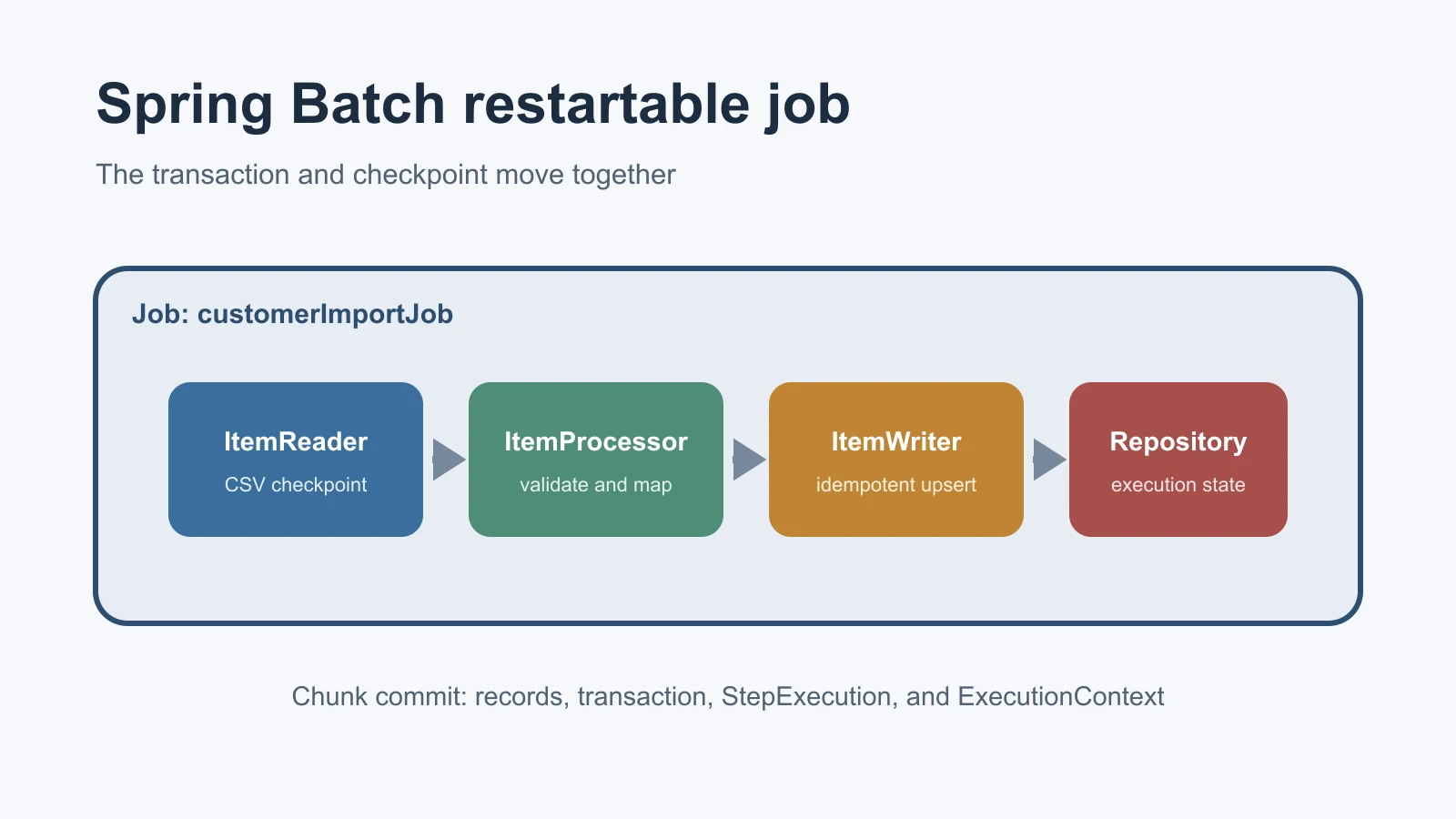
JavaSpring Batch: A Practical Guide to Restartable Jobs
Learn Spring Batch 6 through a restartable CSV-to-database job covering jobs, steps, chunks, metadata, fault tolerance, parameters, testing, and scaling.
Sep 23, 2026
-
 Programming
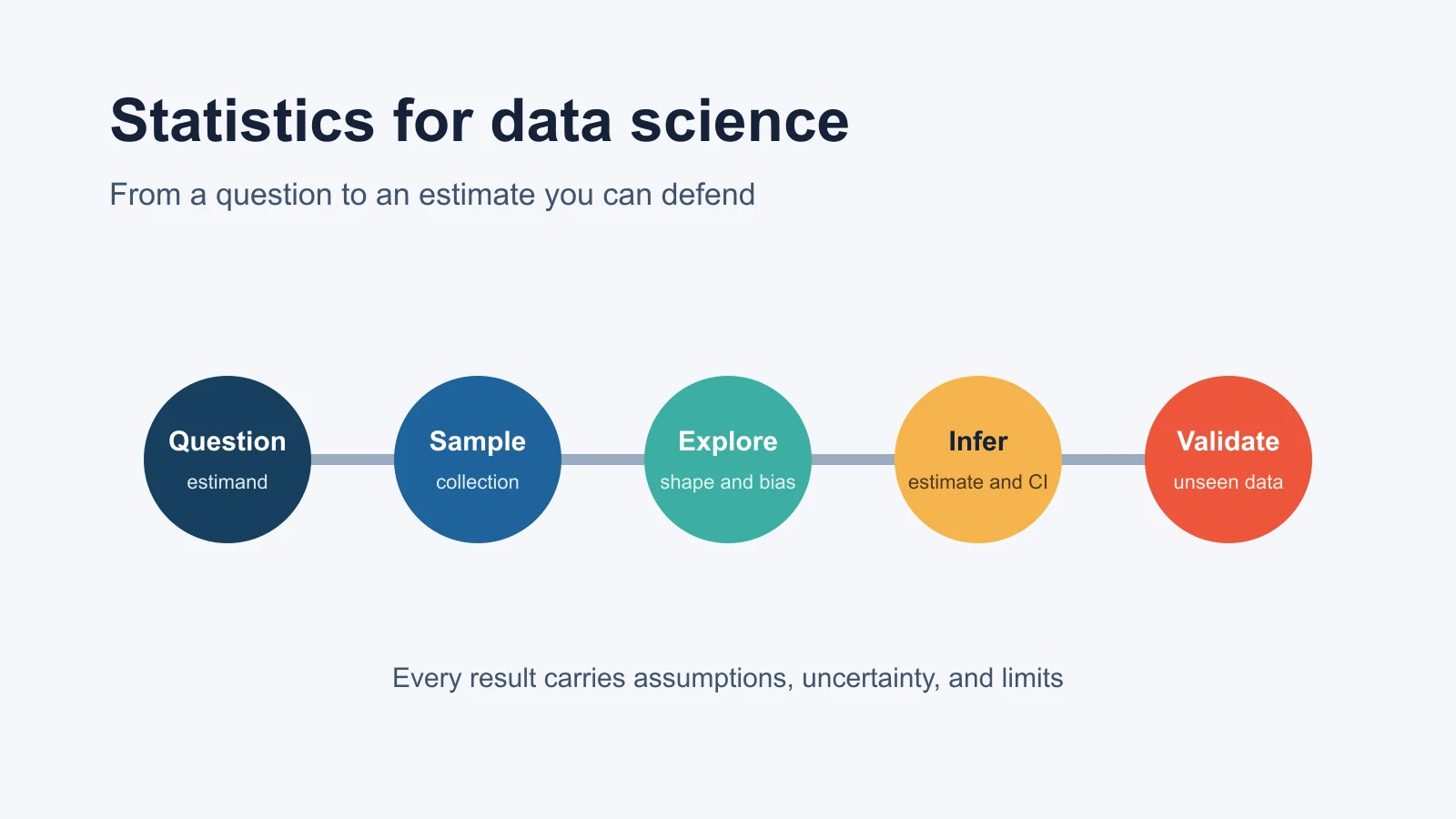
Statistics for Data Science: Complete Guide with Examples
Learn the statistics behind data science with Python examples on distributions, sampling, confidence intervals, hypothesis tests, regression, and leakage.
Sep 23, 2026
-
 Case Study
Autograder Fixed in Under 24 Hours: 100/100
How our networking expert diagnosed a broken distance vector routing submission and delivered a 100/100 autograder score before the deadline.
Sep 2, 2025